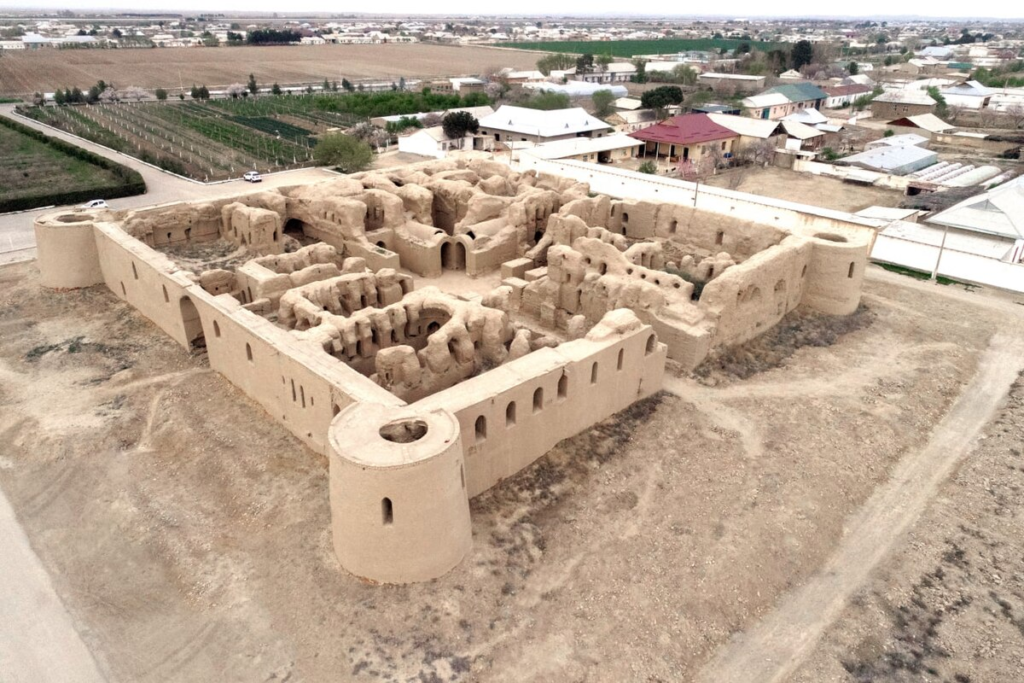
The Kirk Kiz Fortressis located in the southern part of Uzbekistan, in the Termez district of the Surkhandarya region. This castle is a historical monument dating back to the 9th-10th centuries, from the era of the Samanids.
Former Soviet orientalist, Doctor of Historical Sciences, and Professor A. Semenov, based on the “Saadia” manuscript obtained from the mullahs of Salavot in the early 20th century, suggested that the Samanid dynasty originated from the village of Somon near Termez or Balkh. According to the manuscript, in the second half of the 9th century, specifically in 865, Hasan al-Amir, the founder of the Termez Sayyids, migrated from Balkh to Termez with the assistance of Arqak, a descendant of the Sasanian general Bahram Chobin. In the village of Somon, established by Arqak, his son Assad Somani, the founder of the Samanid dynasty, was born.
The “Saadia” manuscript also mentions that Ismail Samani, remembering his origins and the support his ancestors received from Hassan al-Amir, would visit Termez annually and provide significant material support to the Sayyids. Due to these ties, Ismail Somani later married his daughter, Mohi Sim, to Amir Abdullah, one of the Sayyids of Termez. Their descendants were known as Khuvanzods. Although A. Semenov pointed out several inaccuracies in the manuscript, some researchers believe that these events are historically accurate and suggest that the Kirk Kiz Fortressin Termez might have been the residence of the descendants of the Samanids.
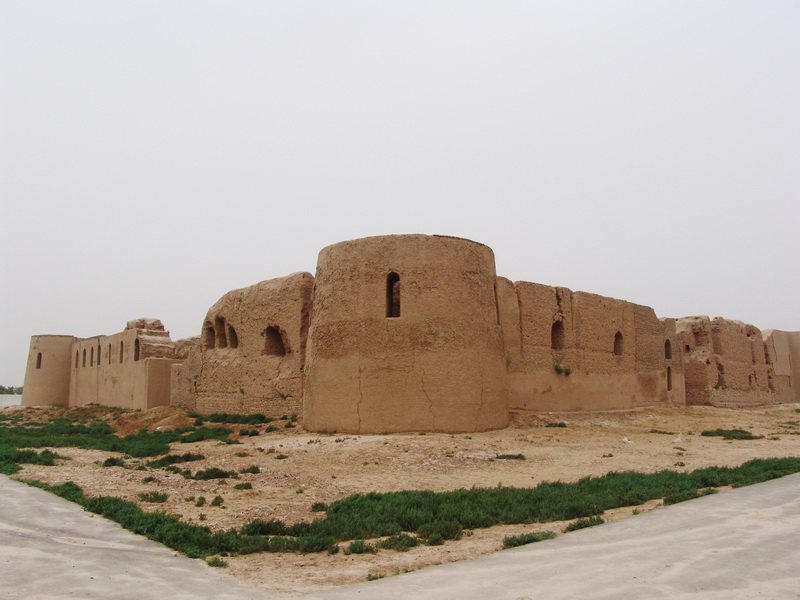
The Kirk Kiz Fortress, situated in the western part of Termez, was a square structure measuring 54×54 meters, with robust towers at each corner. Although it appears to be an impregnable fortress surrounded by fields, this impression is misleading. The interior of the building is well-organized, featuring a central hall (11×11 meters) intended for dervish activities. The building is divided into four distinct blocks by enfilades of entrance rooms. Two of these blocks, located in the northern part of the structure, each contain five rooms. The second block includes two rooms and a refectory, as indicated by archaeological finds such as fragments of tandoors, deep plates, and cooking fireplaces. The rooms and halls of Kyrk-kyz are distinguished by their two-tone color scheme, and the height of these spaces, regardless of their area, reaches up to 7 meters. The Kirk Kiz Fortress featured arches and domes of various designs, adding to its architectural complexity. Constructed from mud brick mixed with adobe, the building also utilized burnt bricks for some of the arched ceilings. Wood was employed for reinforcement and in window openings, while the interior remains modestly decorated.
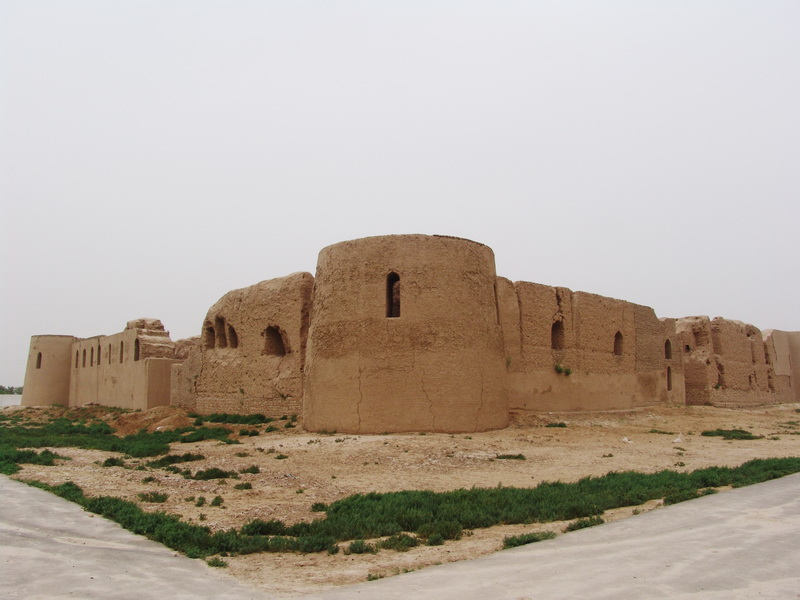
Researchers have proposed several theories about the building’s historical use, including that it may have served as a noble’s palace outside the city, a madrasah for girls, or a caravanserai.
Today, the Kirk Kiz Fortress is a significant site of historical, architectural, archaeological, and environmental interest on the tourist route of the Surkhandarya region. In 2001-2002, as part of the 2500th anniversary celebrations of Termez, and again in 2018, repair work was conducted on the monument, funded by the state budget.
https://maps.app.goo.gl/x4JY391ZQo42wscD8